
Coming soon
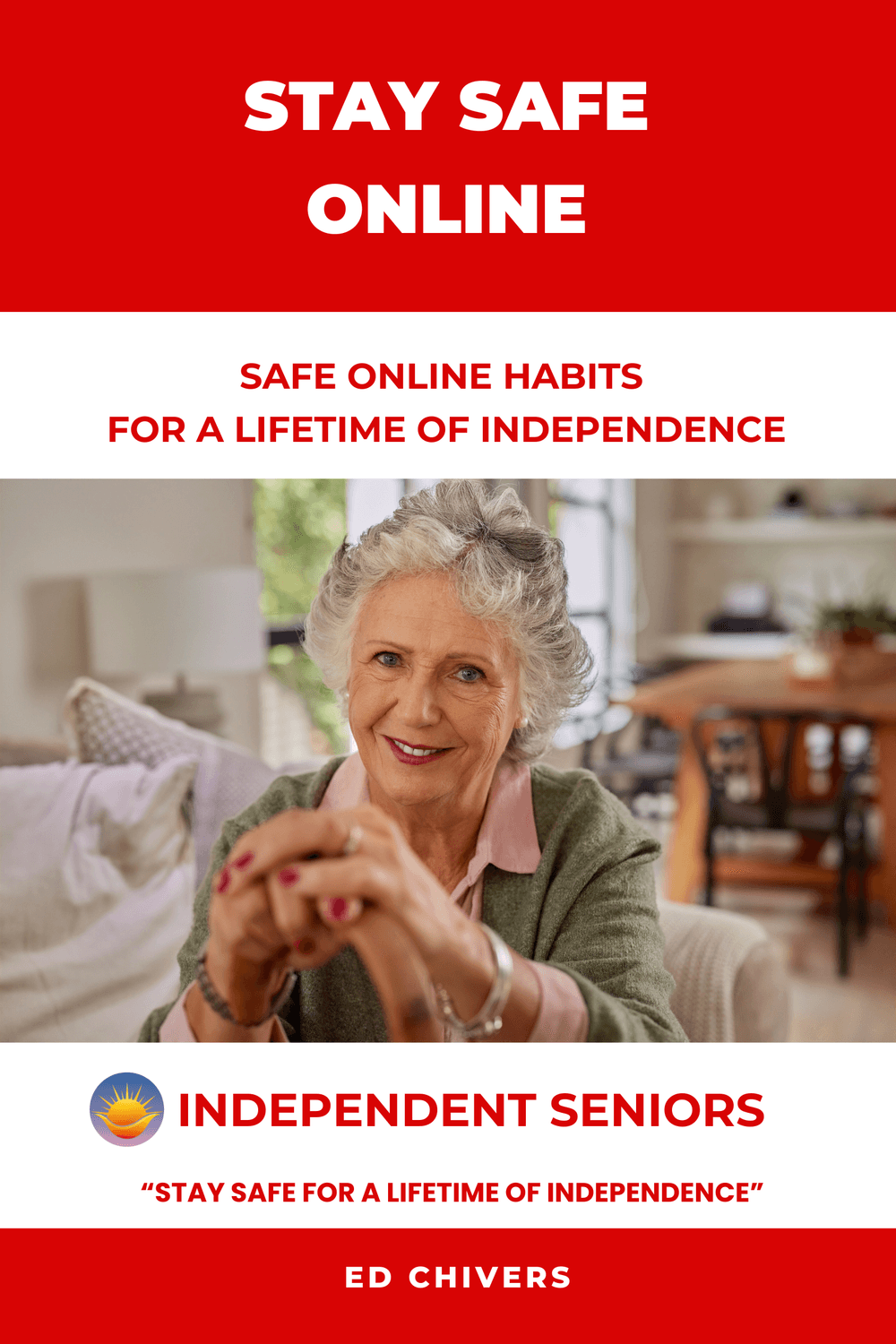
Stay Safe Online
Safe Online Habits for a Lifetime of Independence.
Why this book
Your phone, your email, and your online accounts hold more of your life than most people realize, and that makes them a target. This book starts with the basics that matter most: passwords you can actually manage, why turning on a second login step is the single biggest thing you can do to protect an account, and how to spot a phishing email now that scammers use AI to write perfect, grammatically correct messages that used to have obvious typos giving them away.
From there it covers safe browsing, keeping your phone and tablet locked down, social media privacy settings, and your home Wi-Fi. None of it requires you to become a tech expert. It just requires knowing which few things to check, and this book shows you exactly where to look.
What you'll learn
- Build a password habit that actually holds up, without memorizing dozens of them
- Turn on the one login step that blocks nearly all automated hacking attempts, on every account that matters
- Spot an AI-written phishing email, now that perfect grammar no longer gives it away
- Browse safely, and tell a real website from a convincing fake one
- Lock down your phone or tablet so a lost device isn't a lost life
- Set your social media privacy so oversharing can't be used against you
- Secure your home Wi-Fi and every smart device connected to it
- Back up what matters, so a breach or a broken device is an inconvenience, not a disaster
By the numbers
The scams reported most by people your age
Every year the FBI's Internet Crime Complaint Center, IC3, publishes what people actually reported. Here is what people 60 and older reported most in 2025, and this book covers all five, in this order.
These are the reports that get filed. The real number is almost certainly higher, since a lot of scams never get reported at all.
- 1Phishing and spoofed messages, 48,064 reports, $77 million lost
- 2Tech support scams, 21,333 reports, $1.04 billion lost
- 3Investment scams, 16,926 reports, $3.5 billion lost
- 4Personal data breaches, 11,705 reports, $324 million lost
- 5Romance scams, 10,188 reports, $584 million lost
None of these numbers are here to scare you. They are here so you know exactly where to put your attention first, and this book walks through each one, plainly, with what to actually do about it.
Every fact, checked and attributed. Every fact and statistic in this book is checked against a credible, named source, government health and safety agencies, peer-reviewed research, and recognised ageing organisations, and re-verified annually. The book's own Fact References chapter lists the full citation for every figure, so you can check the evidence yourself.
Selected citations from this book
- Federal Trade Commission. How To Recognize and Avoid Phishing Scams. https://consumer.ftc.gov/articles/how-recognize-avoid-phishing-scams
- Cybersecurity and Infrastructure Security Agency (CISA). Avoiding Social Engineering and Phishing Attacks. https://www.cisa.gov/news-events/news/avoiding-social-engineering-and-phishing-attacks
- Federal Trade Commission. How To Spot, Avoid, and Report Tech Support Scams. https://consumer.ftc.gov/articles/how-spot-avoid-and-report-tech-support-scams
- Federal Bureau of Investigation, Internet Crime Complaint Center (IC3). 2025 Internet Crime Report. https://www.ic3.gov/AnnualReport/Reports/2025_IC3Report.pdf
Subscribe to be the first to know
Stay Safe Online is in active development. Leave your email and we'll let you know the moment it's ready, in every format, at launch pricing.
No spam. Just one email when the book launches.
Questions
When will Stay Safe Online launch?
Do I need to be tech-savvy to use this book?
Does this cover password managers?
What about passkeys? I keep hearing about them.
Will it help me protect my phone specifically?
What this book gives you
You'll walk away with
- ✓A short list of things to actually check and fix, not a technology course
- ✓The confidence to keep banking, browsing, and video-calling without fear
- ✓Knowing exactly where to look, instead of guessing
Why it matters
- ♥Far fewer hacked accounts and stolen passwords
- ♥Less anxiety every time you go online
- ♥Staying digitally connected to family instead of retreating from it
More from the Stay Safe Series
Every book in the series stands alone, so start wherever your worry is right now. See the full series →