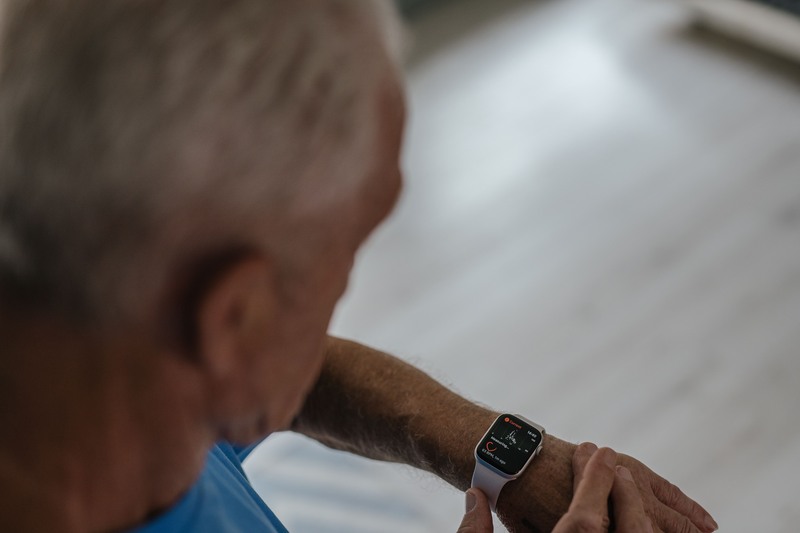

“I live alone, and I’ve wondered who’d know if I fell.”
This book shows you how a watch, a medical alert pendant, or the phone you already own can call for help, and how fall detection can call for you when you can’t reach the phone.

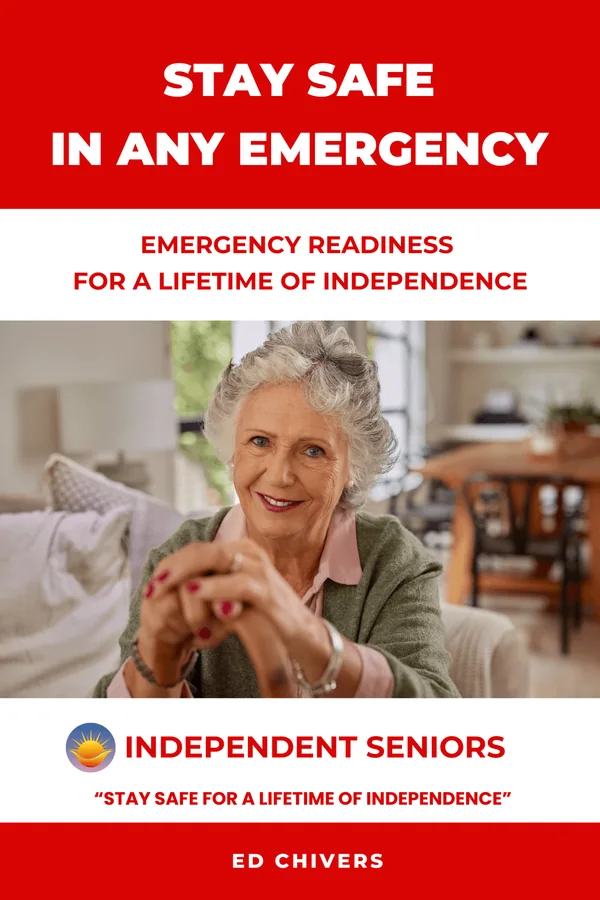
Book 1 · The Stay Safe Series · Available now
A plain-English guide to the technology that keeps you reachable. Whatever happens, you can call for help, and someone will know.
From $9.99 · eBook, audiobook, paperback
If you need help right now, call 911 in the US or your local emergency number.
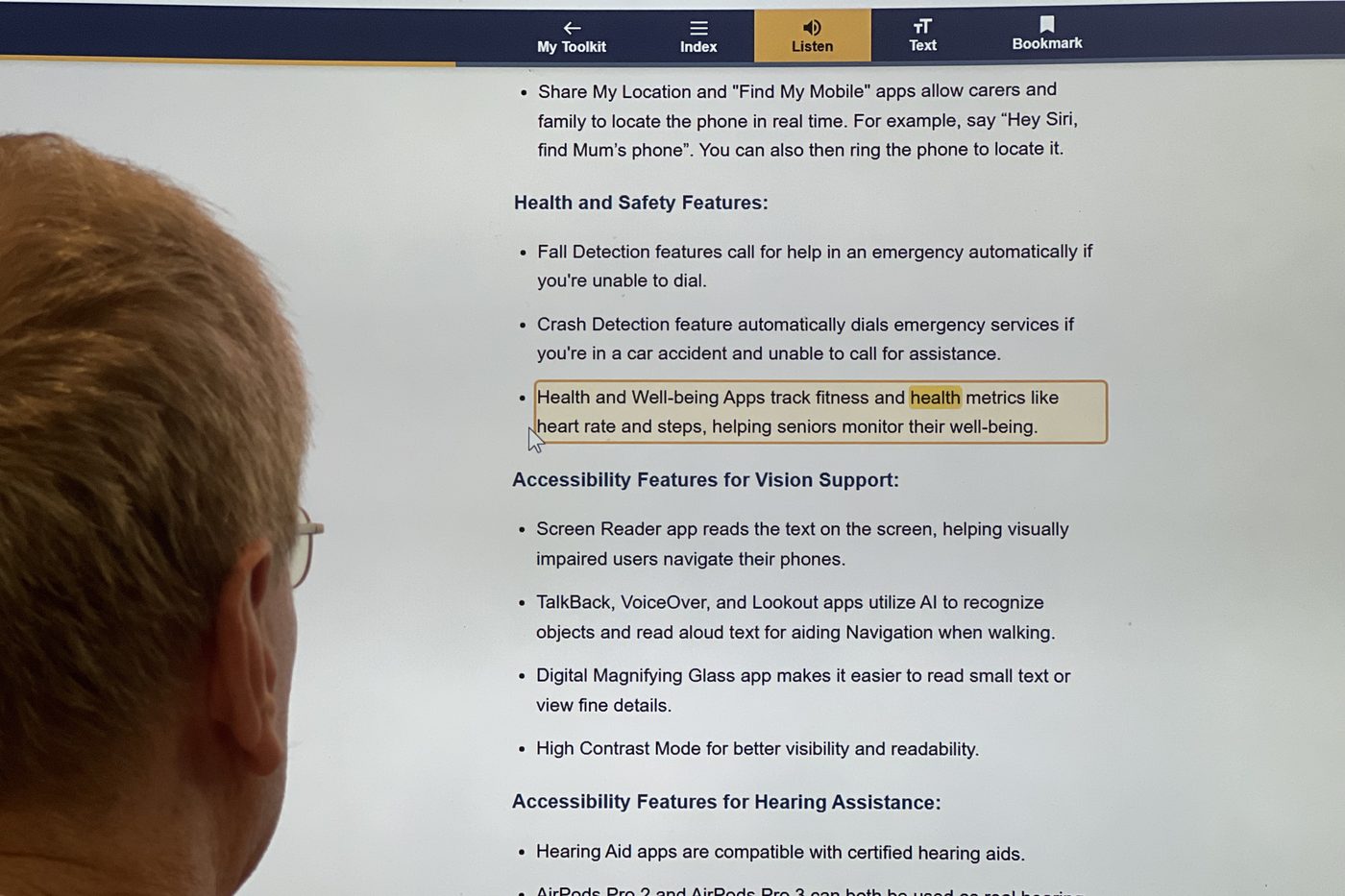
Ed listening to Stay Safe in Any Emergency in the Toolkit. The paragraph being read is highlighted as the narration plays.
It probably is if one of these sounds familiar.
This book shows you how a watch, a medical alert pendant, or the phone you already own can call for help, and how fall detection can call for you when you can’t reach the phone.
You’ll see how each kind of device works, what it can and can’t do, the questions to ask about cost, and how to choose one that fits your life.
The book is written for the person who’ll wear the device, so it works best read together. There’s a gentle way to raise it further down this page.
My friend Phil fell at home. His phone was ten feet away, and he couldn’t reach it. He wasn’t found for six hours, and he never walked again.
The devices that could have called for help that day exist right now. Most of them fit on a wrist or in a pocket. This book explains them plainly: what a fall-detection watch does, how a medical alert works, which apps are worth setting up, and how to make sure they’re switched on before the day you need them.
It isn’t about being watched, and it isn’t about giving anything up. It’s about being reachable, on your own terms, wherever you are.
— Ed
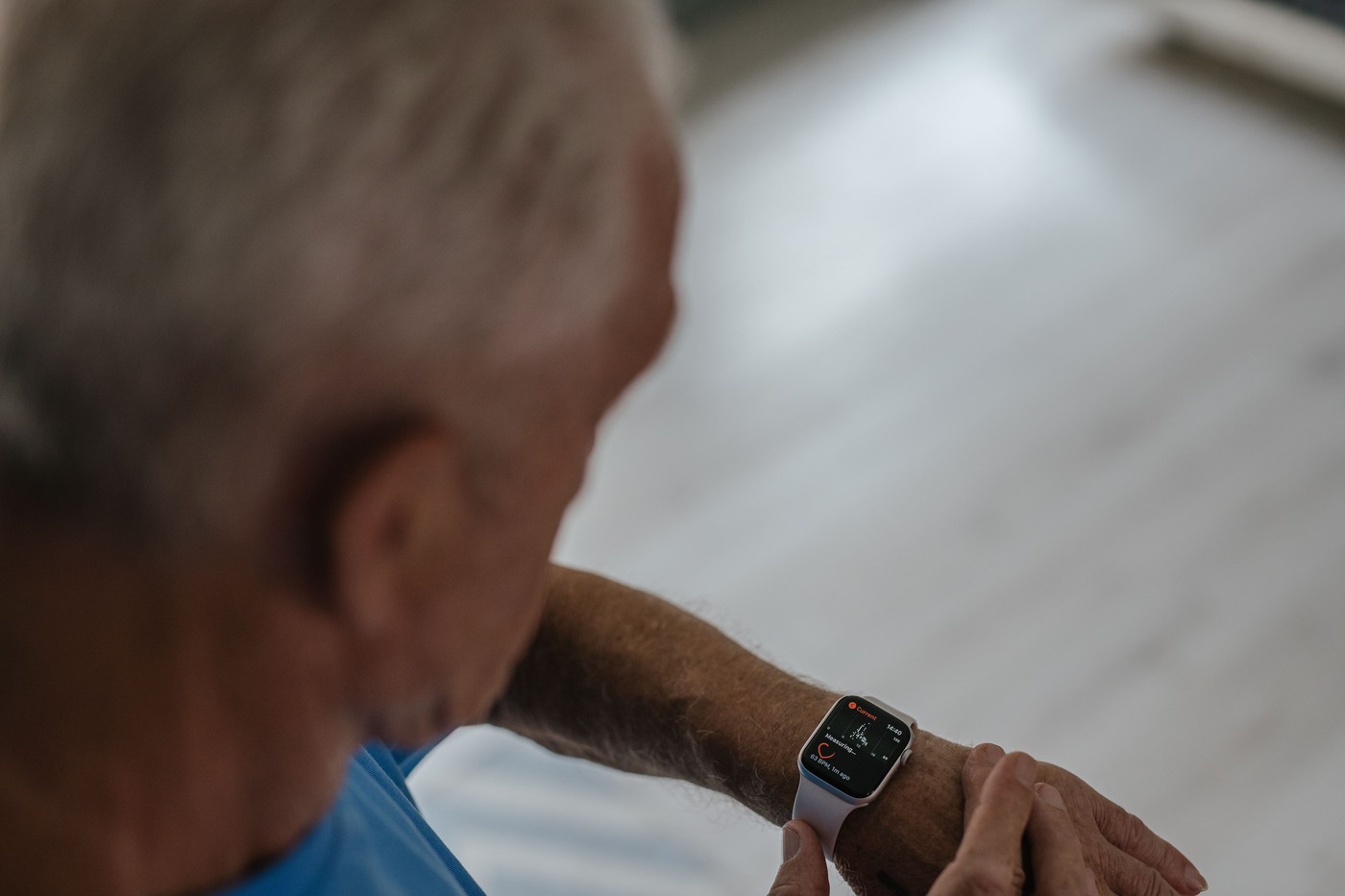
Every kind of “staying reachable,” explained simply, with a free companion checklist to help you act on it.
Fall and crash detection, SOS shortcuts, and location sharing, and how to set them up so they work when it counts.
Quiet, comfortable options for people who don’t want to wear a watch, plus tablets for staying in touch with family and calling for help.
Glucose monitors, heart-rhythm sensors, and seizure alerts: what they do, and where their limits are.
Screen readers, voice control, hearing-aid pairing, and magnification, built into the phone in your pocket.
The apps worth loading and setting up before you ever need them, in plain language.
How 911 and 112 work, how to set up your phone for emergency calls when you travel, and a companion booklet of emergency numbers country by country, so travel doesn’t catch you out.
Where this book names a product or app, it’s an example of a feature, not a recommendation. We don’t sell devices or take payment to feature them.
The book is clear about one thing: the health readings from watches, rings and monitors are a guide, not a diagnosis. What these tools are good at is helping you notice changes sooner, with better information, so you know when it’s time to seek medical advice.
Interactive checklists, guides and planners to fill in on screen, save and print. Each comes in a standard and a dyslexia-friendly edition. With the eBook or the audiobook, you add them all from the book in your Independent Seniors Toolkit. With the paperback, the address printed near the end of the book gives you the book’s checklists and the Global Emergency Numbers booklet, and the Fall Prevention Checklist, Fall-Risk Self-Check, ICE Wallet Card and First Aid Guide are free for everyone on our Free Resources page.
Also free for everyone
The eBook and the audiobook come to you through the free Independent Seniors Toolkit, for easy reading on your phone, tablet or computer. It opens in your web browser, so there’s no app to install, and there’s no file to download: the book lives in your Toolkit. Add the book once with the code from your purchase email, and it opens from your Toolkit with one tap.
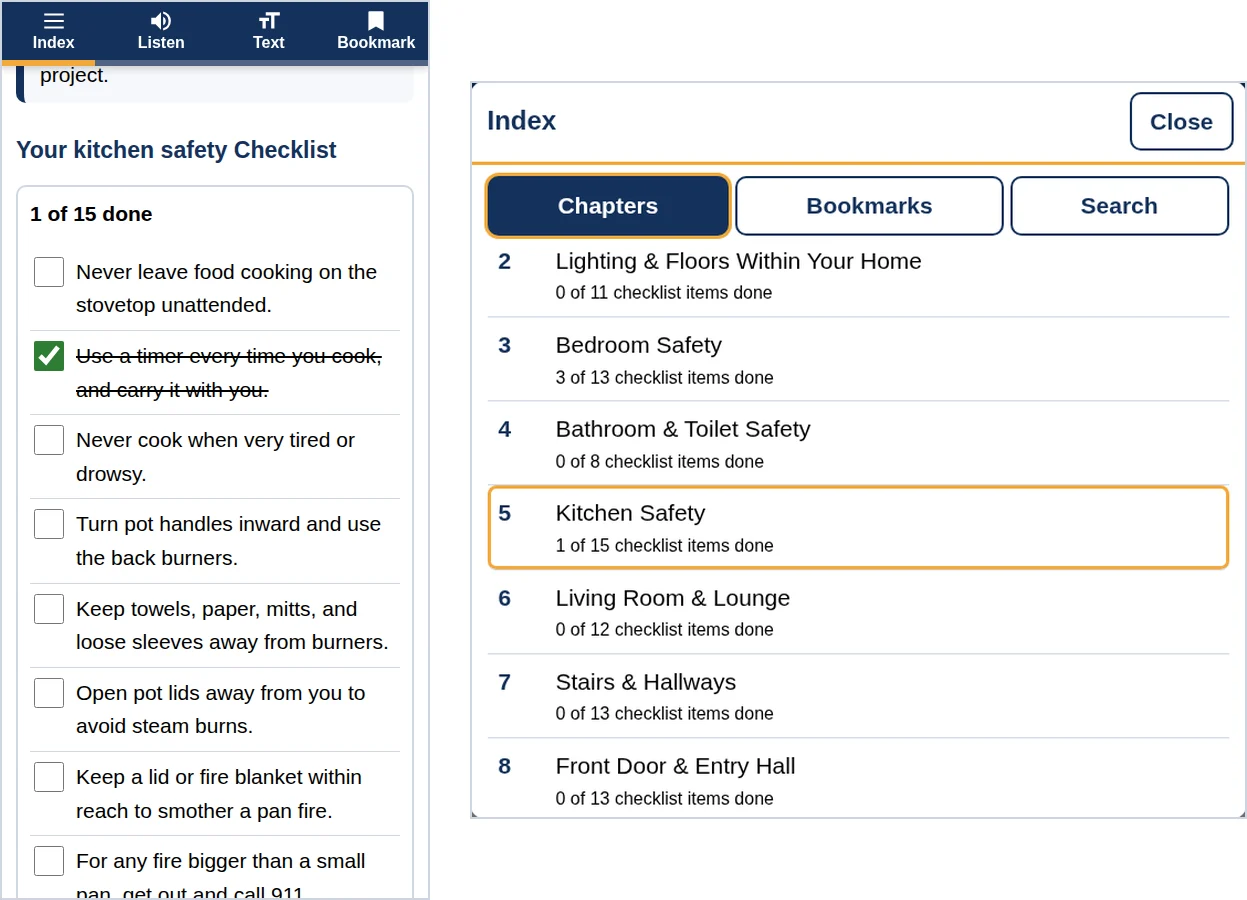
Same book, same companion checklist, whichever way you like to read.
$9.99
Read it in your free Independent Seniors Toolkit, our book reader, in the web browser on your phone, tablet or computer. No app to install, and no file to download. Choose from five text sizes, up to extra large.
Buy the eBook$14.99
The eBook ($9.99) with the audio add-on ($5.00): the author reads the book to you in your Toolkit, and each word is highlighted as it is read.
Buy the Audiobook$19.99
A printed copy for the shelf, or to lend to family, in standard print or in a dyslexia-friendly edition. Printed to order and shipped by BookSpace, so it isn’t covered by our money-back guarantee.
Buy the Paperback (opens in a new tab) Buy the Dyslexia-Friendly Paperback (opens in a new tab)How you read the eBook and the audiobook. In your free Independent Seniors Toolkit, our own book reader. It opens in the web browser on your phone, tablet or computer, so there’s no app to install. They aren’t PDF or EPUB files to download: the reader gives you the Index to jump straight to any chapter, picks up where you left off, and, with the audiobook, reads the book to you in my voice.
Also free for everyone
With the paperback, the address printed near the end of the book gives you the book’s checklists, and everything below the line is free for everyone. Each comes in a standard and a dyslexia-friendly edition. What each one is.
Not sure yet? Look inside: read the Introduction free.
Already have the eBook? Add the audio for $5.00 in your Toolkit: open the book and press Listen.
Secure checkout by Stripe. Taxes and any shipping are shown at checkout before you pay. Not right for you? Read the Refund Policy.
ISBN for the eBook and audiobook: 978-1-7648199-0-9 · Paperback: 978-1-7648199-2-3 · Dyslexia-friendly paperback: 978-1-7648199-4-7
Every statistic in this book is checked against a credible, named source: government health and safety agencies, peer-reviewed research, and recognized aging organizations, with a numbered reference in the text. The book ends with a Fact References chapter that lists each source in full. You don’t have to take our word for it. You can look it up. If we get something wrong, we fix it and say so.
The book’s Fact References chapter lists every source in full.
Page last reviewed by Ed Chivers on November 2, 2026. Figures on this page were checked against their sources on that date.
Short, sourced answers on the topics in this book, free to read here.
No. The book covers medical alert pendants and base units that work without a smartphone, as well as watches, rings, and phones. If you do have a phone, it shows you the free safety settings already built in.
No. It explains how each type works and what to look for, so you can choose what suits your life and budget. Where a product is named, it’s an example, not an endorsement.
No. The book explains 911 and 112 and how to set up your phone for emergency calls abroad, and a companion booklet lists emergency numbers country by country, so you’re set when you travel or when family lives overseas.
No. The eBook and the audiobook open in your free Independent Seniors Toolkit, our book reader, which runs in the web browser you already have, on your phone, tablet or computer. There’s nothing to install from an app store. Add the book once with the code from your purchase email, and from then on it opens with one tap, even without the internet.
No. The eBook isn’t a file you download: you read it in your Toolkit, which was made for this series. The Index takes you straight to any chapter, it picks up where you left off, it has five text sizes and a dyslexia-friendly lettering, and with the audiobook I read the book to you, with each word highlighted as it is read. If you’d like a printed copy, there’s the paperback.
Yes. The eBook has five text sizes, up to extra large. The audiobook needs no reading at all.
Both. It’s written for the person who’ll use the device, in plain language, and it includes gentle ways to talk about it as a family.
It depends on the company and the plan. Most charge a monthly monitoring fee, and fall detection often costs extra. Our free answer, How much does a medical alert system cost?, sets out the fees, what Life Alert and Medicare say, and what to ask before you sign. The book then explains how each type of device works.
If you bought the eBook or the audiobook here, on this website, you have 30 days to ask for your money back, no questions asked. Paperbacks aren’t covered (they’re printed to order by BookSpace, with no change-of-mind returns), and nor are books bought on Amazon or another store, which follow their own policies. Read the Refund Policy, or contact us and we’ll help.
This book shares general safety information. It isn’t medical, legal, or financial advice. For advice about your own situation, talk with a qualified professional.
Choosing an alert device for someone else can be a delicate conversation. This book is written for the person who’ll wear it, so it works best read together, or handed over without a lecture. A good first step is our free Fall-Risk Self-Check: sit down with a cup of tea and go through it side by side. It turns “I’m worried about you” into “let’s look at this together.”

Book 1 helps you get help fast when something goes wrong. Book 2 helps you lower the chance it happens at all, room by room.

A room-by-room guide to common hazards around the home, with practical fixes.
Go to Book 2